10 Things We Take Seriously in Our Charlotte Mason Homeschool
This post shares 10 things we take seriously in our Charlotte Mason homeschool in order to give our children a robust education, and the importance of being intentional about what we prioritize in our homeschools.
I spend a lot of time thinking and writing about how to simplify our homeschools, and about how very often less is more. I firmly believe that we do not need to imitate the public schools when we homeschool, and that, most of the time, we homeschool moms are trying to do too much – to our children’s detriment. I’ve even shared an extensive list of things we do not do in our homeschool!
However, what about the other side of the coin?
What if you really, actually, are doing too little for your child’s education?
I don’t ever want to give the impression that a) our child’s education is unimportant or b) that I am not taking this job seriously. Our children only get one childhood, we only get one shot at this homeschool thing, and yes, it is important!
In order to address this “other side of the coin,” and perhaps help you to think through this balance as well, I’ve made a list of everything that I do take seriously: this is what I spend time, effort, and money on in my homeschool.
Will I spend my money and time on buying piles and piles of grade-specific curriculum, forcing my children to do it, and then grading all of their work? NO.
Will I keep my children on a strict schedule, making sure we have a “full school day” of book work? NO.
Will I give my children lots of tests in order to make sure that they’re “on track”? NO.
However, everything I list below is something on which we have spent money or time (or both), and it has greatly benefited our children and their education.
10 Things We Take Seriously in Our Charlotte Mason Homeschool
#1: We Take Reading Aloud Seriously.
This will come as no surprise to anyone who has been around our blog for a while. There are many, many reasons why you should read aloud to your children, and we make a point to do this multiple times a day. The only time this stops is if mom is seriously sick – and even then I will have the kids turn on their Yoto player and listen to an audio book instead.
What this looks like practically:
We work hard at encouraging our kids to be readers, and we spend a lot of time and money in searching for (and buying) good books for us all. We have standards for the books we choose, and while yours may be different than mine, I would encourage you to have and hold to some standards too.
Not all reading is equally beneficial, and what our children are consuming does matter.
We have made the effort to build the habit of reading and of listening to read alouds, and this has paid off! Our children are accustomed to listening to good, even difficult books (see #9 also), and their vocabulary has grown exponentially.
#2: We Take Habit Training Seriously.
As much as I love them, education is much more than just books. Charlotte Mason said “education is an atmosphere, a discipline, a life;” and what she meant by “discipline” is the creation of good habits.
What this looks like practically:
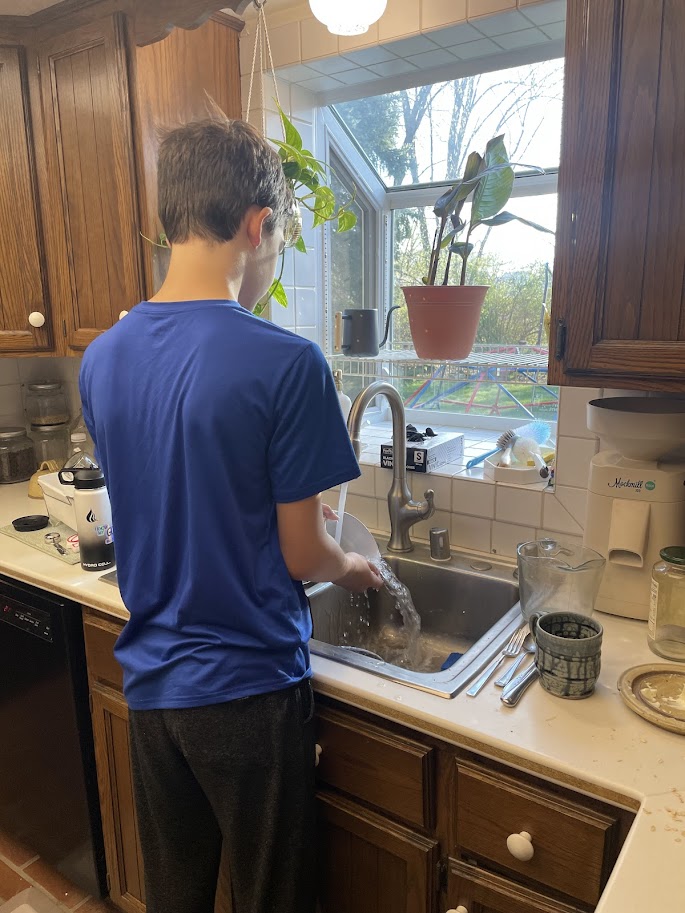
An important part of our school day is daily and weekly chores for all the children (and mom!). We might have time for more bookwork if I did all the chores myself, but this is not good for the children AND it is not sustainable long-term.
Beyond chores, we also take the time for working on character habits: learning respect, attention, listening, obedience, kindness, and patience are all an important part of our school day too.
#3: We Take Sibling Relationships Seriously.
Harsh words, making fun of siblings, physical fighting, cruel comments – none of this is allowed, and we continue to work towards good sibling relationships, however imperfectly we may do so. This is important to us, and I will gladly stop a math lesson or a read aloud in order to address an issue that arises.
One of the common reasons for homeschooling is to strengthen family relationships, but this will not happen unless we are teaching and modeling healthy words and actions.
What this looks like practically:
Honestly, this is hard and takes a lot of time. It means I have to be willing to stop what I am doing and address issues that arise. It means we have to be patient, even though we have been coaching this particular child on how to use gentle speech continuously for the past five years. It means I have to pray for daily grace and compassion so that I can model the very behaviors I am trying to instill… even when I am exhausted and frustrated.
Would it be easier to send them off to their individual classrooms and individual teachers? In many ways, yes. But this is important to us, and so we persevere.
#4: We Take Mom’s Education Seriously.
By this I do NOT mean that I am enrolled in college courses or community classes (as fun as that might be!). Rather, I mean that finding time to read for myself is important, as well as thinking about what I am reading and discussing with my husband or a friend.
We often hear phrases like “you spill what you’re filled with” or “you cannot pour from an empty cup.” There is truth here, and if we want to be mothers with wisdom to navigate the middle school, teen, and even college/adult years with our children, we must have some wisdom to draw from.
As a Christian this begins with the Bible, but beyond that, you can find practical applications of Biblical wisdom in many, many books – by both secular and Christian authors.
Charlotte Mason believed that all truth and beauty ultimately comes from God, whether the human author of that truth recognizes this fact or not. I love this idea because it encourages us to read widely and freely, thanking God for all truth and beauty we encounter along the way!
Like Solomon, we can pray for “an understanding mind to govern Your people,”* because this is exactly what we are doing, and exactly what we need. *1 Kings 3:9
What this looks like practically:
If you’re just starting out homeschooling – read a wide variety of books about education, homeschooling, or educational philosophies! You’ll discover what sort of education you want for your children and cast a vision for what homeschooling can be.
If you’re already settled in your homeschooling – keep reading, and expand your horizons! Read more books about education, about parenting older children, non-fiction on any topic that interests you, well-written fiction, old books, classics, new books, hard books, easy books.
Some seasons I don’t read enough, and I feel that my mind is slowly withering. Other seasons I read too much, and the house is not as clean as it should be! However, in every season it has been worth the effort to keep striving after that elusive balance, and keep reading something.
#5: We Take Our Community Seriously.
We all need it, and it’s worth spending time, effort, and money to find or create it. The kids need friends, Mom needs friends, and it’s good for everyone to regularly spend time with other homeschooling families.
Beyond just the homeschooling community, we also need our church and neighborhood communities!
What this looks like practically:
We have given up an entire day of our homeschool week to Classical Conversations for the past five years. We take time out of our school days for playdates with friends, and for inviting other families over for lunch. We’ve opened up our home to the neighborhood kids, and we strive to help our kids learn to be good friends and good examples.
Not just attending but being involved in our church is another priority, and much of our free time is given to church services or other events. This all takes time and effort, but to us it’s worth it!
#6: We Take Attention and Thinking Skills Seriously.
I’m fairly certain that every previous generation has made this claim, yet I will boldly make it once more: in this current age we need critical thinking skills more than ever before. Rather than simply memorizing facts, our children must know how to sort through the dizzying mountain of facts at their fingertips.
Rather than simply accepting what they read on the news, or online, or on social media, they must be willing to ask questions and consider thoughtfully whether it is true.
What this looks like practically:
Talking, talking, and more talking! And let me tell you, as an introvert who LOVES the sound of silence, this is not easy. Don’t get me wrong, I love talking with my children and hearing what they are thinking – the hard part is when all five want to talk at the same time and IT NEVER STOPS.
However, this is how our children learn to think and process: by doing it out loud, with an adult, in the comfort and safety of their own home.
We read, and then we talk. We eat dinner, and we talk. We drive out to do errands, and we talk.
And no, not every conversation is a Deep Learning Experience – sometimes it consists of me listening to a list of every creature in their Make Believe Worlds along with all their favorite superpowers.
However, within the daily torrent of words, opportunities to teach and think together will pop up with surprisingly regularity.
#7: We Take Marriage Seriously.
The health of the marriage affects the health of the family, and the health of the family affects your homeschool. Family relationship issues will hinder any learning from happening, which is why it’s well worth your time to repair sibling relationships (see #3 again) and to invest in your marriage.
What this looks like practically:
This looks like spending the time and effort (and often money) to go on dates regularly – or even just to put the kids to bed early (or turn on a movie) so that Mom and Dad can talk and catch up!
This looks like making an effort to communicate well, pay attention to each other’s needs, give respect and love freely, and assume the best in all situations.
#8: We Take Our Screentime Seriously.
Full confession: this has gotten more difficult as our children have grown, and our daily routine now includes quite a bit more screen time than it did five years ago.
However, we maintain strict boundaries on WHAT SORT of screen time is allowed and HOW MUCH screen time is allowed! For the first ten years of our parenting, we had a mostly screen-free home, and it was amazing. Parenting is absolutely simpler when screens are minimized.
What this looks like practically:
Again, this can be hard. In some ways it would be 1000% easier to just let our boys play any and all computer games for as long as they want every day (though it would NOT be easier dealing with the attitudes and emotions afterwards)!
Instead, we have to spend time thinking about what our rules should be, and why, and then enforcing and changing them when needed.
We also have to make sure that our kids have other things to do with their time besides screens – and again, this is not easy! We have to plan, think, and create other hobbies, activities, sports opportunities, or playdates. Yes, sometimes simple boredom is the answer – and our kids will come up with some amazingly creative solutions! – but on the other hand, it’s not fair to limit our kids’ screen time without giving them something better to fill that void.
#9: We Take Narration (and Challenging Literature) Seriously.
I have a strong aversion to making my kids “work hard” at something that is meaningless. Helping Dad cut logs and clear brush from the woods? Definitely! Piles of busywork with information that they will forget 10 minutes later? No thank you!
However, one of the biggest ways we have changed our boys’ education as they’ve grown is by adding in more challenging literature.
What this looks like practically:
I have read unabridged Dickens and Shakespeare to our children this year, and asked the older ones to tell back what they heard. We’ve given our older boys significantly longer, more difficult books for their independent reading, and asked them to write narrations telling what they read.
Narration is much harder than filling in a worksheet! A worksheet tells you what is most important about the book or subject – and then all you have to do is scan through the chapter to find your answers.
Narration, on the other hand, requires you to remember (and understand!) all that you heard, sort through the details, decide for yourself what was most important, and explain it in your own words.
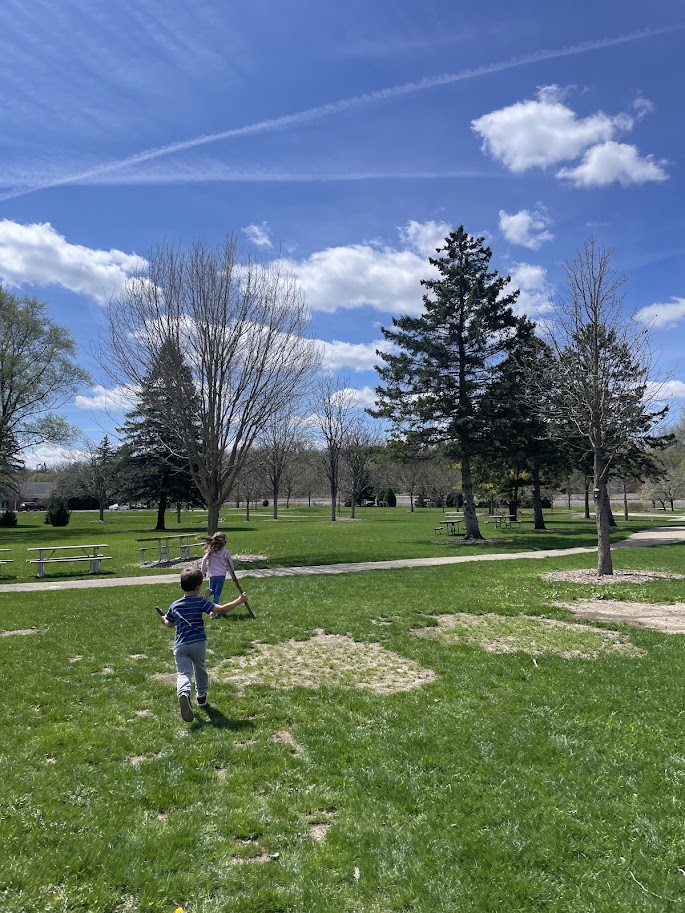
#10: We Take Outdoor Time Seriously.
This is not just for health reasons (though that alone should be enough to convince anyone!), but as an integral part of our children’s education. Time spent in nature results in a personal, hands-on knowledge that is foundational to all science study, art and music (note how often nature is referenced in art!), and even our spiritual lives (your understanding of the Bible and its metaphors will be severely limited without an understanding of the world God created).
What this looks like practically:
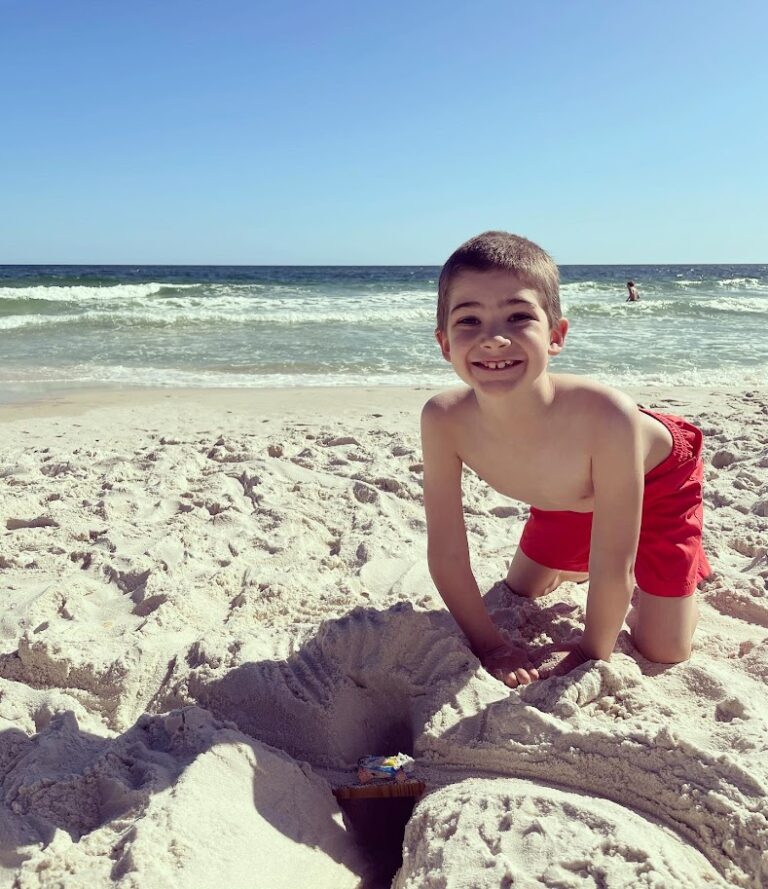
We spent money this year on a climbing structure and trampoline, and have zero regrets so far! It’s been a fantastic way to encourage the kids to be outside moving their bodies. We also try to regularly take family walks, hikes, or bike rides, and while we are out we pay attention to the nature we see around us. Simple attention and curiosity work wonders! “Look at that bird! I’ve never seen that before – I wonder what it is? Let’s look it up when we get home.”
As I wrote in another post, nature study in its essence comes down to getting outside and paying attention – and that’s something that anyone can do.
Do You Need to Take Your Homeschool More Seriously, or Less?
This is a very personal question, and you’ll have to answer it for yourself. Everyone has their own particular bent, and it might change depending on the season!
For the first few years of our homeschool, I started out doing too much for my little kindergartener, and I had to learn how to relax, simplify, and trust that the good things we were doing would bear fruit in time.
Tip: If you find yourself constantly stressed, worried about if you are doing enough, and overwhelmed by homeschooling – you’re probably in the “too much” camp and could stand to loosen up a little. Check out my list of 15 ways to simplify your homeschool!
Now, as our children move into middle school, I am thinking and praying about more ways to challenge them appropriately and make sure that their school work is not too simple or easy for their growing brains.
Tip: If you notice that your older kids are done with their school before 9am, you can’t remember the last time you graded a math lesson, and you haven’t read anything to your kids in a month – you’re probably in the “too little” camp and could stand to take your homeschool a little more seriously. Check out this post on Signs of Successful Homeschooling and read my tips at the end for what to do if you DON’T see any growth in your homeschool.
Conclusion
Just because our homeschool is simple does not mean it is haphazard or unintentional.
Just because I do not buy a lot of curriculum does not mean I’m not thoughtfully planning my child’s education.
Just because my kids have hours of free time each day does not mean I am neglecting them!
I avoid worksheets and tests out of principle, not laziness.
I choose living books to read aloud instead of textbooks because I’m convinced it’s a better education.
I use narration instead of worksheets because it forces our children to think more deeply.
We have much room for growth in all these areas, but these are the ten priorities that shape our Charlotte Mason homeschool. From the outside, it might look simple (and in many ways, it is) – but it is still intentional, rich, and deeply purposeful. You don’t need a complicated plan to take your homeschool seriously!
Often, it looks like simply paying attention to the right things – again and again, day after day.