How Long Should Homeschool Take? Advice From a Mom of 5
This post shares answers to the question “how long should homeschool take?” and gives examples of daily routines for our family of five children.
Do you ever wonder if you’re doing enough in your homeschool? It’s easy to look at the public schools and think, “Well, those kids are ‘in school’ from 8am to 3pm every day… so shouldn’t my kids be doing the same?”
And then, if you finish early, or your kids protest against such a long day (as they should), doubt begins to creep in.
Are we really doing enough? Will my kids be successful? Are they learning anything at all? Would they be better off in public school?
And beyond the doubt, there’s also the (major issue of) burnout!
I can’t keep up a schedule like this!
If I homeschool them for 6 or 7 hours a day, when will I ever cook, or clean, or even just sit and THINK?
These are all major issues, but thankfully there is an answer – and it’s simpler than we think.
The solution: DO NOT IMITATE THE PUBLIC SCHOOLS.
I don’t know all your reasons for homeschooling, but I do know that your children are not in the public school right now for a reason. Let’s not fall into the trap of imitating the very system we’ve rejected!
And in case you are unsure about this, let’s carefully think through the reasons why our children do NOT need a 7-hour school day.
Our Kids Do Not Need 7 Hours a Day of School
First off, please know that public school children do not get 7 hours of academics each day.
I spent my high school years in two different public schools, and here are just a few of the non-academic things that I remember from those school days: walking between classes, frequent stops at my locker, lunch, recess, announcements, study halls, gym, assemblies, more announcements, more assemblies, waiting for the teacher to pass out papers, waiting for the teacher to give directions, waiting for the other kids to settle down, waiting for the other kids to finish, waiting for a bathroom pass, and waiting for the bell to ring so we could move to something else.
I don’t fault my teachers, nor the schools – managing that number of children is necessarily a slow and cumbersome process.
But in the end, how many hours of actual academic learning do you think happened each day?
I don’t know, but I would guess it to be less than half of the total hours spent at school.
The indisputable fact is that getting a good education only takes a fraction of the time that public schools spend on it. The main reason public schools have such a long school day (especially for the younger years) is because parents need the free daycare – NOT because this is how long it takes to teach kindergarteners the alphabet.
In our homes we generally have a much smaller number of children, and therefore, even with numerous life interruptions, we can cut out SO MUCH of this “lost time” – and what a gift this is to our children!
So How Long Should Homeschool Take?
The answer depends on the age of your children, but most of the time, none of our children (ages 13 and under) have EVER spent more than 4 hours a day on school work.
None of our kids under 7 have EVER spent more than 2 hours on school work.
If this sounds shocking to you, take a look at the routines we’ve used and see how many subjects you can cover that amount of time!
Here are a few sample routines we’ve used:
MORNING TIME (all ages together): about 1 hour of reading and discussing history, science, literature, Bible and poetry together
5-6 Year Old Child: 30-40 minutes of phonics, math, and/or reading picture books with Mom (broken up into several chunks)
Total school for the day: 1 hour and 40 minutes
7-8 Year Old Child: 30 minutes of math, 30 minutes of independent reading, 15 minutes of piano practice, and 15 minutes of handwriting or typing
Total school for the day: 2 hours and 30 minutes
9-12 Year Old Child: 30 minutes of math, 30-45 minutes of independent reading, 15 minutes of handwriting or typing, 15-30 minutes of piano practice, and 15 minutes of writing
Total school for the day: 2 hours and 45 minutes – 3 hours and 15 minutes
Of course, this doesn’t mean that if you start your Morning Time right at 9:00 am, your 8 year old will be completely done with their school day by 11:30 every day. They might be (and that’s great!). But often these blocks of school work are interrupted by snacks, movement breaks, chores, outside time, or other normal life events.
Important Note: there are many other parts of our day that I consider to be essential pieces of my child’s education, even though they are NOT academic bookwork.
For example, I would count any and all of the following as part of our education when counting hours for the school year:
- helping with cooking, cleaning, or projects around the house
- family dinners & conversations
- field trips or visits to local museums/zoos/nature centers/etc
- walks, hikes, and bike rides
- volunteering or church ministry
- time spent with grandparents
- gardening or caring for pets
- playing board games or card games
- time at our homeschool co-op
And there’s so much more you could add to this list! Take a minute and think about how much learning is going on during everyday life – whether it’s reinforcing money skills through Monopoly or learning what it takes to keep a small animal alive. This is school too, and while it’s not MORE important than the bookwork, it’s also not LESS important.
What Do You Fill the Rest of the Day With?
Let’s say you’ve reduced your homeschool day to a reasonable length, the kids are putting in a solid morning’s worth of effort, and you finished your priorities for the day by lunch time.
What then?
Of course, any babies or toddlers in the house might have a nap time to fill their afternoon, and you probably have some dinner prep or cleaning to catch up on – but what about the other children? What are they supposed to do all afternoon?
The answer: PLAY, outside if possible.
For younger kids this is easy enough. They probably have plenty of toys they enjoy, and you simply set them free to build, explore, draw, create, pretend, or whatever else they love to do in their free time.
My advice: keep your young children as screen-free as possible, for as long as possible.
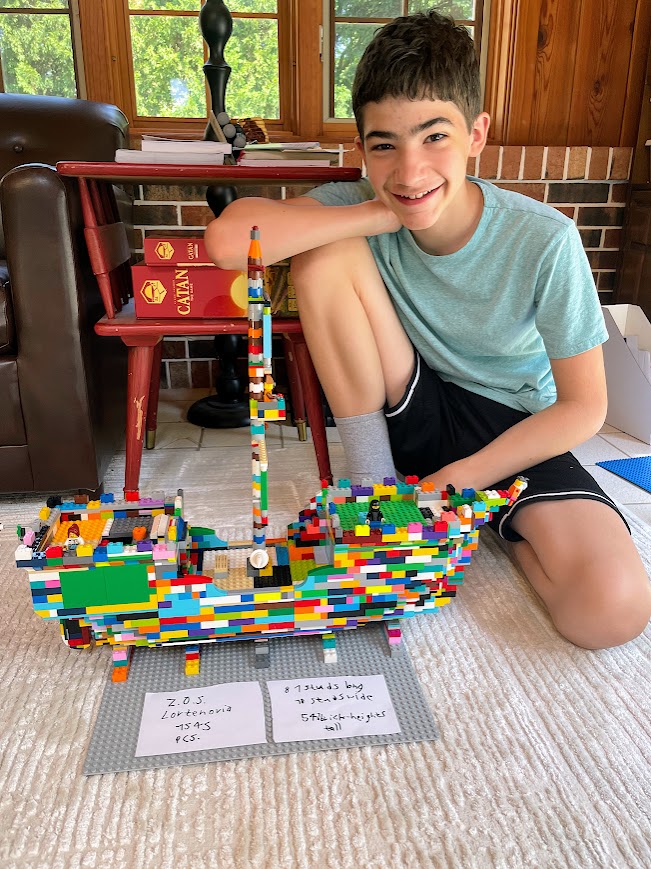
For older kids, their play might begin to look different. Play might turn into pursuing a hobby, spending time with friends, practicing a sport, or building complex Lego creations. The premise, however, remains the same: set them free to explore, create, and build – whether that means they are building friendships or building marble runs.
My advice: support your older child’s play as much as you can by providing space, tools, training (on Youtube or through books), and of course, SNACKS for them and their friends. And don’t shame your 13-year old who still wants to play with blocks or your 11-year old who sits down to build magnatiles with the toddler! This extension of childhood is one of the MAJOR perks of homeschooling. Yes, even your middle-schoolers and your teens still need to play.
How Do We Know If We’re Doing Enough?
The short answer: we don’t get to know this.
NO ONE gets a guarantee that their child will be happy and successful, whether they choose to public school or homeschool.
The slightly longer answer: if you’re putting time and effort into your homeschool and you see your kids growing in various ways, you’re probably doing just fine. On the other hand, if you’re trying to also work full-time, you have a newborn baby, and you have no idea what your kids are doing in their school work, it might be time to reconsider if homeschooling is right for you.
I firmly believe that simple homeschools can be extremely effective, yet at the same time the choice to educate our children at home is a commitment, and if we are in a season where we can’t spend any time on it, then we may need to let it go.
The deep-dive answer: if you want to read more about this, check out this post: 7 Signs of Successful Homeschooling. In this post we dig into what homeschool success really looks like, practical examples to look for in your own homeschool, and also tips for what to do if you DON’T see any signs of growth in your children.
Conclusion
There are two important points that I hope we can all take away from this discussion.
Number 1: Book work is only a small part of your child’s education.
Chores, free play, time with siblings, nature exploration, family dinners, habit training, and community involvement are also incredibly important parts of our child’s development, even though we might not normally count them as “school.”
Time we spend on these is not wasted, and they should be a regular part of our child’s life.
Number 2: Public schools don’t spend 7 hours a day on book work, and neither should we.
A public school day includes transitions between classes, lunch, recess, study halls (for older kids), art and music, and gym – not to mention the time that teachers take to give directions, correct behavior, pass out papers, and wait for everyone to finish!
Viewed from this perspective, our homeschools are incredibly efficient; yes, even with the crying baby and the needy toddler.
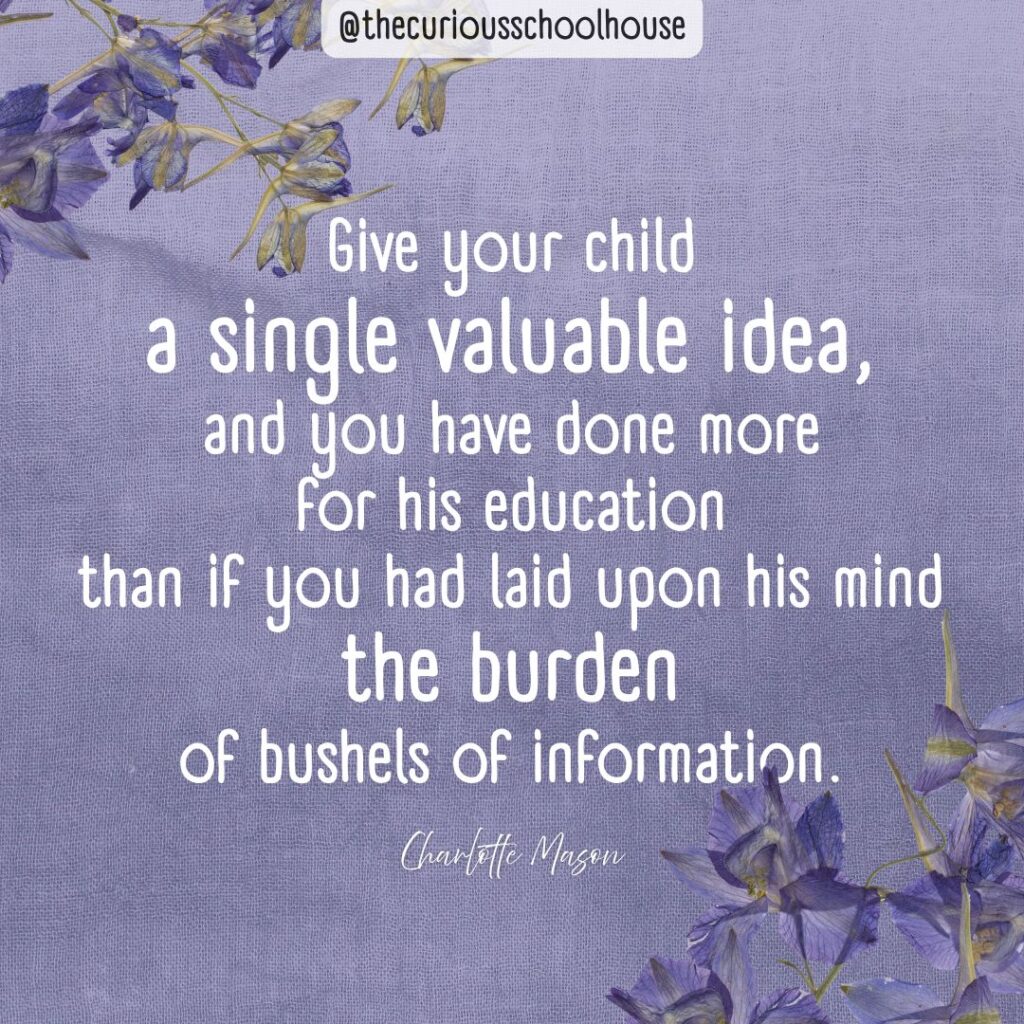
Book work shouldn’t take all day. The younger the child, the less official “school” time they need and the more free play time they need. “Bushels of information,” as Charlotte Mason says, can be more of a burden than a blessing, and we would do well to remember that.